|
|
Welcome to the NCTCOG Center of
Development Excellence Newsletter!
|
|
|
|
|
|
|
|
|
|
|
Regional Colleges & Universities Highlight
|
|
|
- Texas Christian University Sustainability Committee Connects Campus Action and Student Learning
|
|
|
|
|
|
|
|
|
- UNT, Cole Family and Johnson Development Collaborate to Preserve Native Prairie at Cole Ranch
- Revitalizing Downtown: Over $17M in Projects to 'Spark' New Interest in Allen
- Data Centers Want to Be Sustainable, Panelists Say. Transparency Also in Demand.
- DART Receives $70 Million FTA Grant to Support Light Rail Vehicle Replacement
- Survey Finds Data Center Growth Outpacing Infrastructure and Policy
|
|
|
|
|
|
|
|
|
- APATX26
- Regional Integration of Sustainability Efforts Coalition Quarterly Meeting
- North Texas Association of Environmental Professionals Monthly Meeting
- Texan by Nature Conservation Summit
- Texas Energy Summit
|
|
|
|
|
|
|
|
|
|
|
- North Texas Zero Emissions Vehicles Call for Projects
- US Forest Service National Urban and Community Forestry Challenge Cost Share Grant Program: Community Tree Resource Utilization
- Texas Natural Gas Vehicle
Grant Program
- Community Centers Energy Efficiency Retrofits for the State Energy Program
- Texas Backup Power Package Program
|
|
|
|
|
|
|
|
|
University Sustainability Highlight
|
|
|
|
|
|
Texas Christian University Sustainability Committee Connects Campus Action and Student
Learning
|
|
|
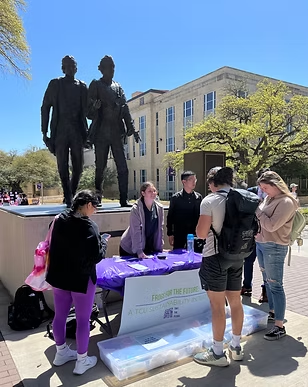
Since the early 2000s, sustainability at Texas Christian University has grown through the efforts of faculty, staff, and students. In 2016, an ad hoc Faculty Senate committee began bringing together campus sustainability work, and TCU established the Sustainability Committee as a permanent university committee in fall 2018. Today, the Committee coordinates and promotes campus initiatives addressing environmental, social, and economic sustainability.
The Committee organizes TCU’s annual Earth Week events and advances practical waste reduction through recycling education, battery recycling, campus reuse, and
participation in the Tarrant Regional Water District’s Trash Bash. It also developed a website with an interactive sustainability map to help students, faculty, and staff locate recycling resources and other sustainability features on campus.
|
|
|
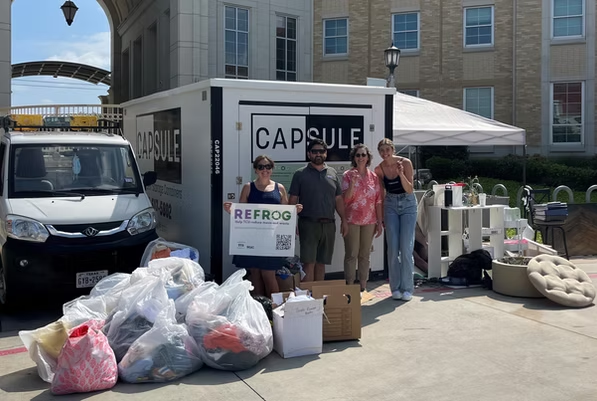
Through the work of several longstanding Committee members, TCU has significantly reduced campus waste during move-in and move-out. During 2026 move-in, TCU diverted 35 tons of cardboard for recycling, a 60% increase from the 22 tons recycled during 2025 move-in. Through the reFrog Move-out Initiative, students donate usable items rather than send them to the landfill. In 2026, reFrog collected 19,820 donated items for reuse and redistribution to community members, an estimated equivalent of 21.36 tons, or 89 eight-yard dumpsters, diverted from the landfill, with 193 volunteers contributing 520 hours to the initiative. The Committee is also beginning a sustainability dashboard to establish baselines and track waste reduction and other sustainability
measures.
|
|
|
TCU also offers interdisciplinary academic sustainability opportunities. The Sustainability Minor, developed through the Committee’s early efforts and launched in 2015, draws coursework from across the university. Open to students in any major, it connects sustainability with science, policy, business, food studies, history, and the social sciences. Students may also pursue a BS in Environmental Science and Sustainability, a flexible BA in Environmental and Sustainability Studies, an accelerated 4+1
BS/MS pathway, or a Sustainable Business Certificate through the Neeley School of Business.
|
|
|
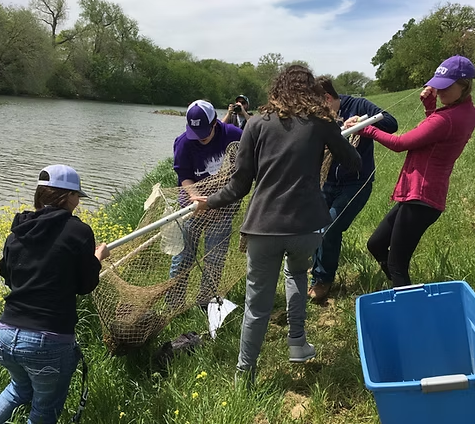
Beyond campus, TCU partners with local organizations to provide service-learning and applied-learning opportunities. At the Fort Worth Botanic Garden, students have assessed tree-provided ecosystem services and estimated invasive privet abundance in two Garden sections. Their results support vegetation
management, invasive-species control, and long-term stewardship. Together, the Sustainability Committee’s work connects campus action, student learning, and community partnerships for a more sustainable North Texas.
To learn more about Texas Christian University’s Sustainability efforts, visit their website at https://www.tcusustainability.com.
This article was submitted by Dr. Brendan Lavy, Associate Professor in the Environmental and Sustainability Sciences Program at Texas Christian University. Original article has been edited for clarity and length. Photos courtesy of TCU Sustainability website.
|
|
|
|
|
|
|
UNT, Cole Family and Johnson Development Collaborate to Preserve Native Prairie at Cole Ranch
|
|
|
In addition to supporting restoration and skill development, this work also gives students and volunteers a sense of pride. "It gives our students hands-on experience while helping create a community that understands and values its native landscape," Baxter-Slye said. By continuing to extend the Cole family’s stewardship legacy, these efforts will help future residents become good stewards of Texas plants and wildlife.
|
|
|
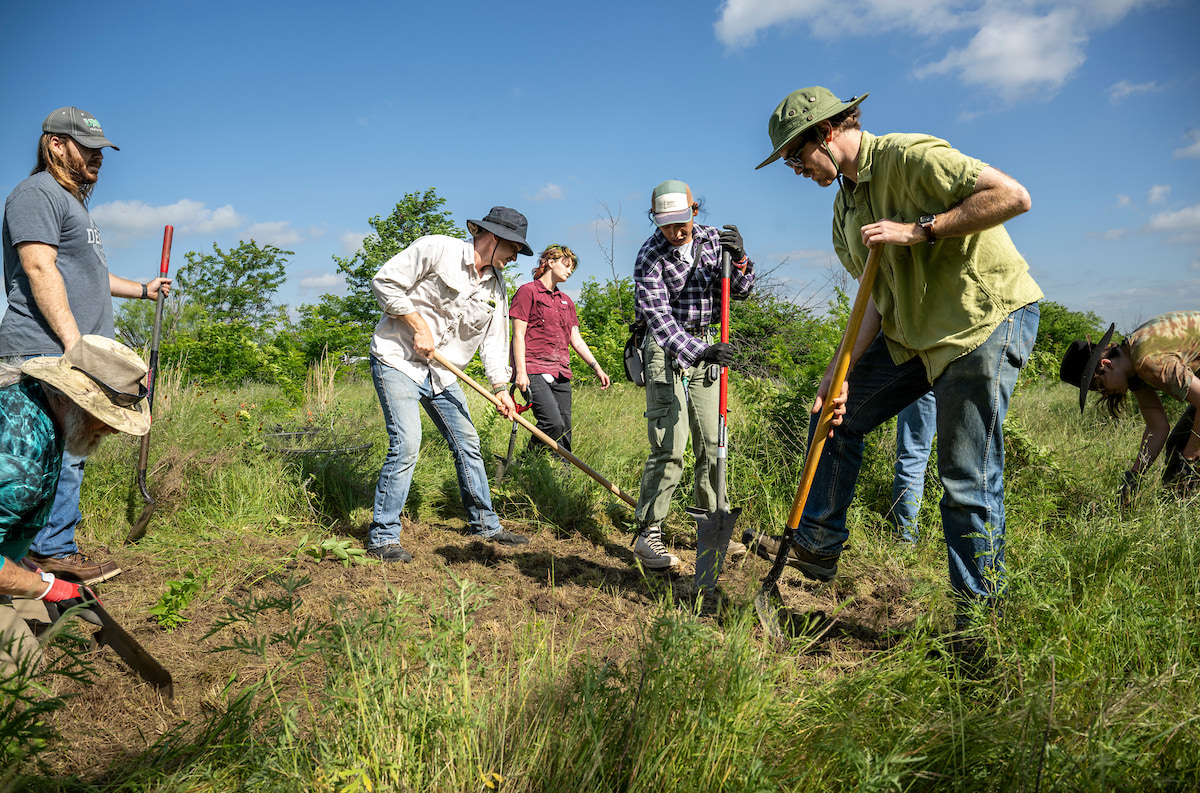
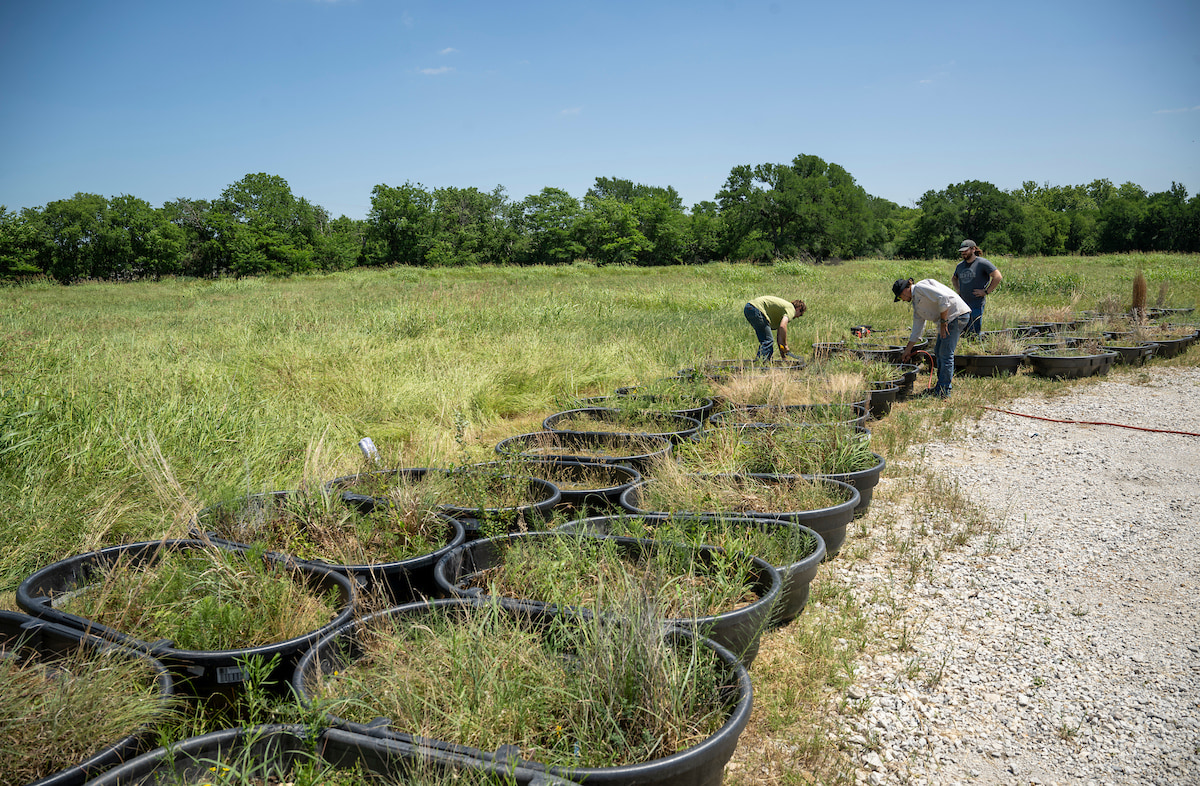
"From the beginning, this has been a shared effort to understand what makes this prairie special, protect high-quality areas and find ways for native plants to remain part of Cole Ranch’s future," shared Clinical Assistant Professor Jaime Baxter-Slye. UNT students and volunteers have the opportunity to explore the importance of integrating native landscapes into communities during their workdays. They also learn best practices for transplanting native plants, which are carefully placed in temporary stock tanks until they can be reintroduced into the community.
In addition to supporting restoration and skill development, this work also gives students and volunteers a sense of pride. "It gives our students hands-on experience while helping create a community that understands and values its native landscape," Baxter-Slye said. By continuing to extend the Cole family’s stewardship legacy, these efforts will help future residents become good stewards of Texas plants and wildlife.
To read the full article, visit the UNT News Webpage.
|
|
|
Revitalizing Downtown: Over $17M in Projects to ‘Spark’ New Interest in Allen
|
|
|
The City of Allen’s Downtown Catalyst Project is expected to break ground with the first phase this fall. Aiming to revitalize the heart of the city through mixed-use development, the Catalyst Project hopes to bring new life to downtown Allen. The multi-year plan is beginning this fall with Phase 1A, which will transform the former fire station into a gathering space by bringing local restaurants, retail space, housing, entertainment and green space into one walkable destination. As part of this revitalization effort, a 352-unit multifamily project is also expected to break ground this fall and act as an anchor for the downtown area. Driven by citizen-led input, city council hopes that this project will help bring economic growth and create a unique space for the community to gather. More details about these efforts
can be found on Community Impact.
|
|
|
Data Centers Want to Be Sustainable, Panelists Say. Transparency Also in Demand.
|
|
|
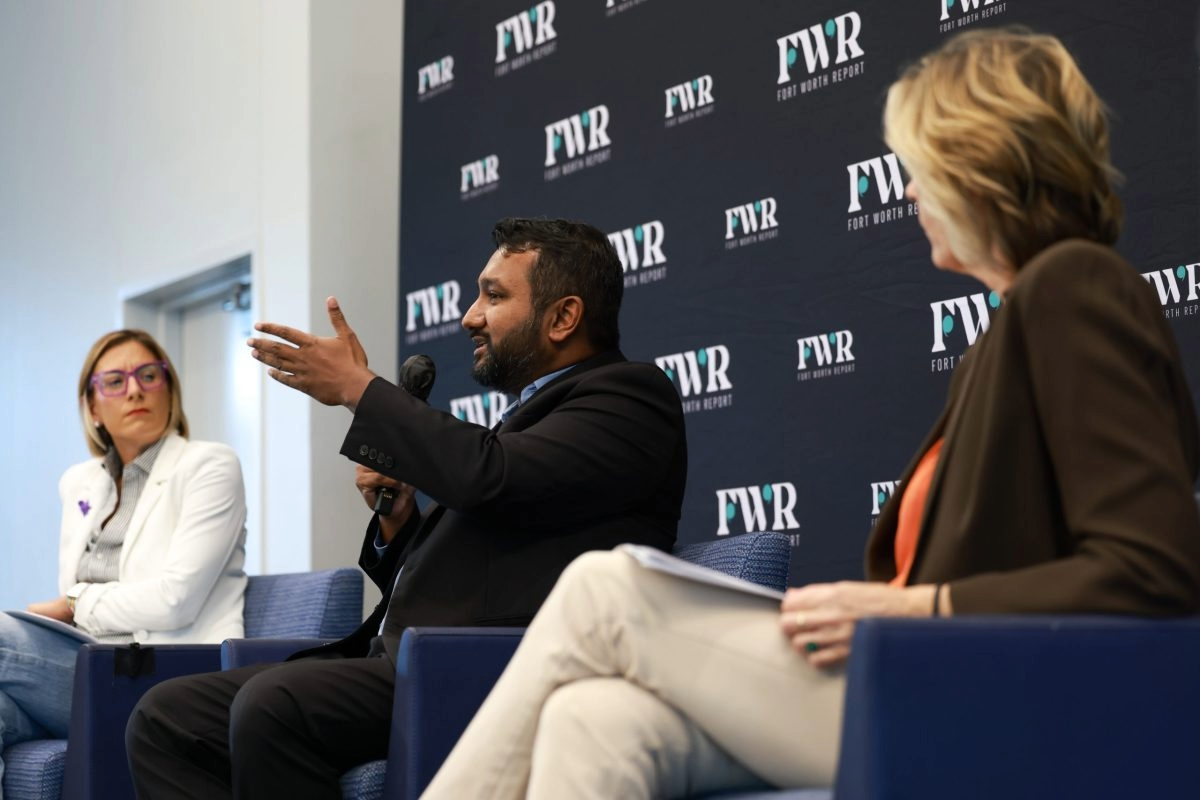
The Fort Worth Reporter recently hosted a panel of experts at Texas Wesleyan University to discuss the topic of data centers in Dallas-Fort Worth. University of Texas at Arlington computer science and engineering assistant professor Mohammad Atiqul Islam, executive director of Texas Christian University’s Ralph Lowe Energy Institute Nikki Morris, and journalist and Concept Elemental founder
Jennifer Warren were panelists at the Informed Discussion: Data Centers in Fort Worth event. They each answered questions about data center demand, the electric grid, and pushback from residents and local governments as interest in data centers surges in North Texas.
Panelists also tackled topics such how the data center technology works, the economic impact it can bring, and the implications of data center resource use on regional sustainability. Islam shared that the potential impact data centers can have on natural resources has created a
surge in interest in DFW and has consequently come with lots of misinformation. He then explained to attendees that there is a need for transparency from developers to ensure that residents are aware of how natural resources are being used. While some developers have publicly stated that their facilities consume very little water, they do not always quantify the amounts of water used.
The panelists also discussed how some developers are more aligned with sustainability than others. Warren cited a Dallas-area data center built by Digital Realty in 2004 which has not garnered criticism for being loud and is generally considered to be a good neighbor to its community. She added that as the data center boom unfolds, clean operations and consideration of the public need to remain.
Review a recap of the event on the Fort Worth Reporter’s website, or watch the full discussion on the event webpage.
|
|
|
DART Receives $70 Million FTA Grant to Support Light Rail Vehicle Replacement
|
|
|
The Federal Transit Administration has awarded a $70 million grant to Dallas Area Rapid Transit (DART) to support the purchase of new light rail vehicles. DART was one of three transit agencies to receive funds for rail replacement projects. The funds will be used to replace 53 light rail vehicles purchased over 30 years ago to support more reliable service delivery, stronger system resilience, comfortable rides, and future growth. The new light rail vehicles are also part of the DART’s broader comprehensive 10-year system modernization and asset management program, DART Transform. More information can be found in DART’s News Release.
|
|
|
Survey Finds Data Center Growth Outpacing Infrastructure and Policy
|
|
|
A survey of 31 North Texas cities and counties indicates growing concerns over data center development in regards to water, power, infrastructure costs, and local rules for managing development. While nearly two-thirds of the survey respondents reported that their community has either approved a data center or is actively considering one, over three-fourths have concerns that their municipality's infrastructure could support development without major upgrades, illustrating a significant gap between the pace of development and
local capacity to manage it. Water and wastewater capacity, electric grid capacity and funding for infrastructure upgrades were among the most frequently cited priorities for communities considering future data center development, and water supply and consumption topped the list of environmental concerns. Most municipalities feel they do not have clear policies or guidelines for evaluating data center proposals and that the benefits of data centers do not outweigh the drawbacks. Nearly all respondents support making sustainability requirements – renewable energy use, water reuse and efficiency standards – mandatory for data center approvals. NCTCOG plans to utilize the feedback collected from the survey, along with input from related efforts, to develop educational resources for its members as they navigate the changing landscape around data centers. Read more about the survey and the results on NCTCOG’s website.
|
|
|
|
|
|
|
|
|
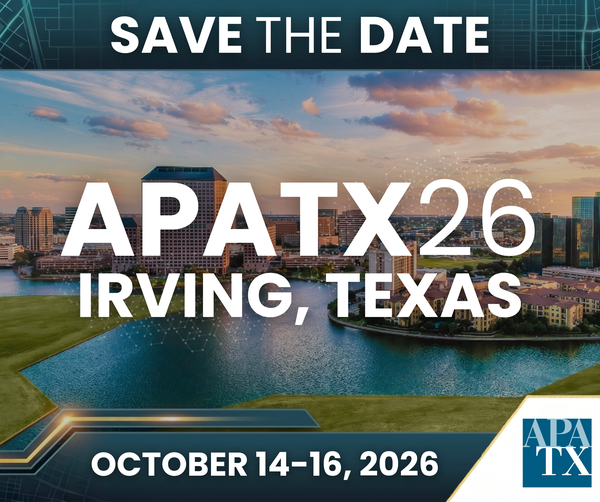
The Texas Chapter of the American Planning Association (APA) will host their 2026 Chapter Conference in Irving, Texas on October 14-16. This year’s conference will invite participants to reflect on the relationships they build, the communities they serve, and the shared purpose that drives planning professionals. The event will feature sessions showcasing planners,
projects, and programs across Texas, as well as recognizing the winners of the 2026 Annual Planning Awards.
Interested attendees can review the conference agenda and registration on the APATX26 conference website.
|
|
|
Regional Integration of Sustainability Efforts (RISE) Coalition Quarterly Meeting
|
|
|
|
|
The North Texas Regional Integration of Sustainability Efforts (RISE) Coalition works to engage interested local governments in peer-exchange opportunities to support sustainability and environmental initiatives. RISE Coalition meetings are open to the public; local government staff working on sustainability, environmental, and climate initiatives are encouraged to attend.
The next RISE Coalition meeting is scheduled for October 21, 2026, at 9:30 AM.The meeting will be
held in-person at NCTCOG’s Offices. If you are interested in attending, please RSVP here.
For more information about the RISE Coalition, visit the RISE Coalition committee page. The RISE Coalition committee page provides information about past and upcoming meetings.
|
|
|
|
|
North Texas Association of Environmental Professionals Monthly Meeting
|
|
|
Join the North Texas Association of Environmental Professionals (NTAEP) on October 21, 2026, for their monthly luncheon. Environmental professionals from across the Dallas-Fort Worth Metroplex are gathering to network and hear from a guest speaker. The last meeting featured a presentation from the Tarrant Regional Water District (TRWD) on flood control construction, mixed-use development, and placemaking
initiatives that continue to shape recent TRWD projects. Visit the NTAEP website to register.
|
|
|
Texan by Nature Conservation Summit
|
|
|
The Texan by Nature 9th annual Conservation Summit will be held at the George W. Bush Presidential Center in Dallas on October 27, 2026. The core focus of the summit is the future of conservation including exploring partnerships spanning the state, diving into the latest data, sharing best practices, and connecting over lessons learned. Other topics that will be discussed include urban forests and water, biodiversity, and much more. There will also be ample opportunity for
networking, new connections, learning new tools, and best practices for conservation. Both in-person and virtual attendance are available; please visit the Texan by Nature website to register.
|
|
|
|
|
The Texas Energy Summit 2026 will be held on October 26-28, 2026, in Austin. Organized by Texas A&M University’s Energy Systems Laboratory, this year’s summit will spotlight the intersection of air quality and energy systems, uniting individuals and groups from government, industry, academia, and non-profit organizations to explore and address pressing energy and air quality issues. Sessions will include discussions of energy policy and the future, air quality, Texas energy leadership, and more. Don’t miss this opportunity to network, learn, and contribute to the energy landscape!
To learn more, explore the agenda, and register for the Summit, visit the event website.
|
|
|
|
|
|
|
North Texas Zero Emissions Vehicles Call for Projects
|
|
|
NCTCOG is offering up to $55.4 million in rebate funding for the replacement of existing Class 6 and 7 vehicles with zero-emission vehicles through the North Texas Zero Emission Vehicle (NTxZEV) Call for Projects (CFP). This program is for "vocational vehicles" including box trucks, step vans, refuse haulers, street sweepers, utility trucks,
transit buses, etc. Public and private entities can apply. The NTxZEV CFP is accepting Round 5 applications! Check Out the No-Cost Application Resources:
- Virtual office hours with NCTCOG every Monday at 10:00 a.m.
- Project development and application assistance from the National Lab of the Rockies.
- A list of original equipment manufacturers/vendors who offer zero-emission vehicles (ZEV).
Deadlines to submit applications are every 3rd Friday of the month at 5:00 p.m. CT, until all funds are exhausted. Applications will be received on a modified first-come, first-served basis and will be evaluated competitively each month. For assistance, please email NCTCOG staff at cleancities@nctcog.org or National Laboratory of the Rockies (NLR) staff at cleanhdvehiclesta@nlr.gov. To apply and for more information, visit www.nctcog.org/NTxZEV.
|
|
|
US Forest Service National Urban and Community Forestry Challenge Cost Share Grant Program: Community Tree Resource Utilization
|
|
|
The National Urban and Community Forestry Challenge Cost Share grant program aims to advance solutions to the economic, health, and environmental challenges faced by communities. This year’s program focuses on advancing community tree resource utilization, which can reduce waste and create value by turning wood generated from
pruning, removals, storm events, and pest or disease outbreaks into useful products. These products may include lumber, slabs, furniture, flooring, biochar, or other materials that strengthen local economies, reduce disposal costs, and improve community resilience. There is $1,000,000 in funding available, with five awards anticipated. Eligible applicants include: - Independent school districts
- Public and state institutions of higher education
- State governments
- County governments
- Federally recognized Native American tribal governments
- Public and Indian housing authorities
- City or township governments
- Special district
governments
- Nonprofits non-higher education with 501(c)(3)
Interested applicants must apply by October 12, 2026 to be considered. Read more about
this grant opportunity on the Grants.gov website.
|
|
|
Texas Natural Gas Vehicle Grant Program
|
|
|
The Texas Commission on Environmental Quality (TCEQ) is now accepting applications for the Texas Natural Gas Vehicle Grant Program (TNGVGP) through October 20, 2026. This grant program operates on a first-come, first-served basis to provide funding for the replacement or repower of an eligible medium-duty or heavy-duty vehicle with a vehicle or
engine powered by natural gas. For more information about the program, eligibility criteria, and steps to apply please visit the TCEQ webpage.
|
|
|
|
|
The State Energy Conservation Office (SECO) is accepting applications from eligible community centers to receive low-interest loan funding for energy retrofit projects. Community centers must provide services and support for people with intellectual and developmental disabilities, serious mental illness, or substance use disorders to be eligible. Loan applications are open through December 18, 2026 at 2 p.m. CT and will be reviewed on a first-come,
first-served basis. Selected community centers will receive a no-cost ASHRAE Level II Audit to identify a program-compliant project that meets the operational needs of the center with a maximum loan amount of $3,000,000. To submit an application or learn more information, please visit the SECO website.
|
|
|
|
|
The Texas Energy Fund aims to provide funding to entities to design, produce, or install backup power packages at facilities necessary to support community health, safety, and well-being through the Texas Backup Power Package Program. A backup power package is a stand-alone, behind-the-meter, multiday back up power source. Applications for this program have not yet opened but are anticipated in the near future. For more information, questions, or assistance please visit Texas Energy Fund Online.
|
|
|
|
|
The Center of Development Excellence (Center) is a regional program in North Central Texas that is built on
collaborative partnerships with a variety of stakeholders including local governments, businesses, private sector professionals and organizations, non-profits, and the public. The Center works to leverage opportunities and funding to create a North Central Texas region that is resilient, sustainable, and provides a high quality of life for residents. To learn more, visit the Center of Development Excellence website.
|
|
|
For questions or additional information on
any of these items, please contact:
Corinne Buckley
Environment and Development Planner
cbuckley@nctcog.org
817-704-2510
|
|
|
|
|
NCTCOG Environment & Development
616 Six Flags Drive
Arlington, TX 76011
United States
|
|
|
|
|
|
|
|